
Microsoft is rolling out a new three-tier release model for Microsoft 365, giving organizations greater control over when users receive new features and updates. The model applies initially to Microsoft 365 Copilot and should expand to cover additional Microsoft 365 services over time.
This rollout has no impact on release channels for Microsoft 365 Apps such as Word, Excel, PowerPoint, OneNote, or Outlook Classic. As described in December 2025, the new Outlook follows the tenant’s release preferences and may therefore be affected over time.
Timeline
- The rollout should be completed in April 2026.
- Microsoft 365 Copilot will follow the new release preferences starting in late May 2026.
- The rollout does not yet affect GCC, GCC High, and DoD cloud environments.
How does this affect your organization?
As Microsoft has announced, the new three-tier release model is intended to provide a more flexible, modern delivery approach that better aligns with different tenant needs.
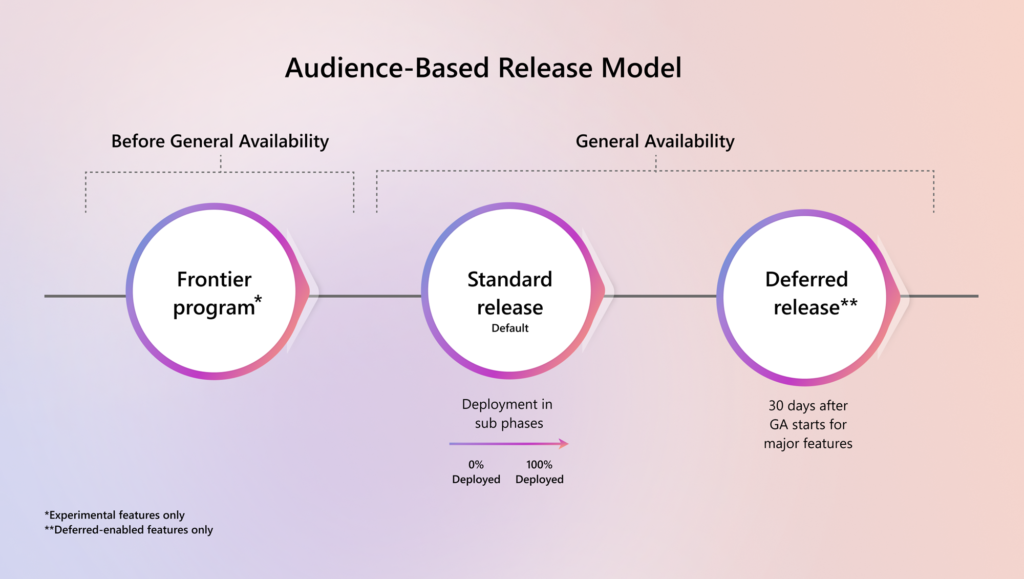
The three tiers are Frontier, Standard, and Deferred.
- Frontier program provides early access to emerging AI capabilities in Microsoft 365 before they reach general availability, intended for organizations that want to experiment with and provide feedback on pre-release features. Frontier features are pre-release, subject to change, and not governed by GA SLAs. Features may be modified, deprecated, or graduated at any time, and Microsoft commits to at least 24 hours’ advance notice of changes via Message Center posts.
- Standard release is the default tier, delivering new features to users as soon as they become generally available. This is the recommended option for most organizations. Features are supported, communicated through Message Center and release notes, and expected to remain available under standard lifecycle policies.
- Deferred release is designed for organizations that need additional time to prepare before major updates reach their users, such as for internal validation, documentation, or training. When a feature is classified as deferred-capable, organizations on this tier receive it 30 days after it becomes generally available in Standard release.
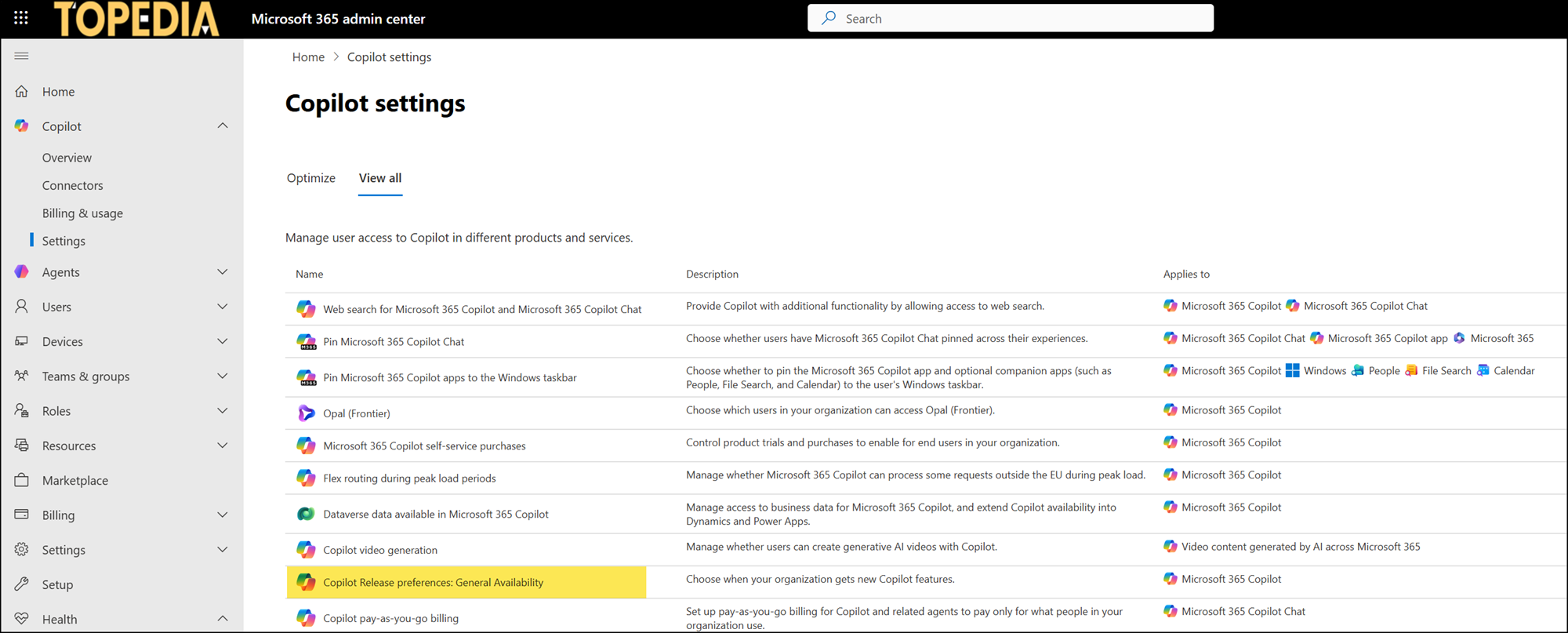
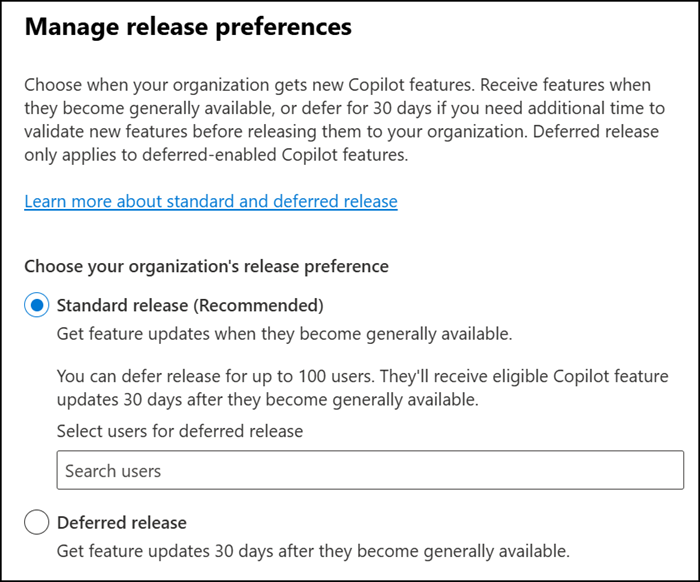
Accounts using the AI Administrator, Office Apps Administrator, or Security Administrator role can configure the new release preferences in the Microsoft 365 admin center at Copilot > Settings > Copilot Release preferences, selecting either Standard or Deferred release as the organization-wide default. It can take up to 24 hours for the changes to take effect in Microsoft 365.
Up to 100 individual user exceptions can be added, allowing specific users to be assigned to a tier different from the rest of the organization. Entra ID groups are not supported for this purpose, consistent with the restriction Microsoft introduced for Frontier users in November 2025. The existing tenant-wide release preferences likewise do not support groups.
The Deferred release option currently applies only to Microsoft 365 Copilot features that Microsoft has classified as major changes. Admins will soon be able to identify which features are deferred-capable by reviewing posts in the Microsoft 365 Message Center.
Organizations currently using targeted release for other Microsoft 365 services can continue to do so, though Microsoft recommends gradually aligning release preferences to the new Frontier, Standard, and Deferred model as more features are delivered through it over time.